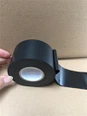

The production process of rubber self-adhesive tape usually includes the following main steps:
Raw material preparation:
Rubber material: mainly natural rubber or synthetic rubber, such as butyl rubber, EPDM rubber, etc.
Filler: such as carbon black, white carbon black, titanium dioxide, etc.
Plasticizer: such as paraffin oil, DOP (dioctyl phthalate), etc.
Accelerator and vulcanizer: such as sulfur, zinc oxide, stearic acid, etc.
Other additives: such as antioxidants, anti-aging agents, etc.
Batching and mixing:
Weigh the above raw materials according to the formula ratio.
Put the weighed raw materials into an internal mixer or an open mixer for mixing to make them evenly dispersed to form a uniform rubber mixture.
Extrusion molding:
The mixed rubber mixture is extruded into the required strip semi-finished product through an extruder. The temperature and pressure need to be controlled during the extrusion process to ensure the quality of the rubber belt.
Vulcanization:
The extruded rubber belt is sent to the vulcanizer for vulcanization. The vulcanization process is usually carried out at high temperature, so that the rubber molecules form a cross-linked structure, thereby enhancing its mechanical properties and durability.
To prevent the self-adhesive layer from sticking during storage and transportation, a layer of backing paper or release film is usually covered on the self-adhesive layer.
Slitting and packaging:
The large roll of rubber self-adhesive tape is cut into small rolls of different widths and lengths according to customer needs.
The cut rubber self-adhesive tape is quality inspected to ensure that the product meets the requirements.
Finally, the qualified rubber self-adhesive tape is packaged and prepared for factory sale.